
Table of Contents
About Apollo Neuro
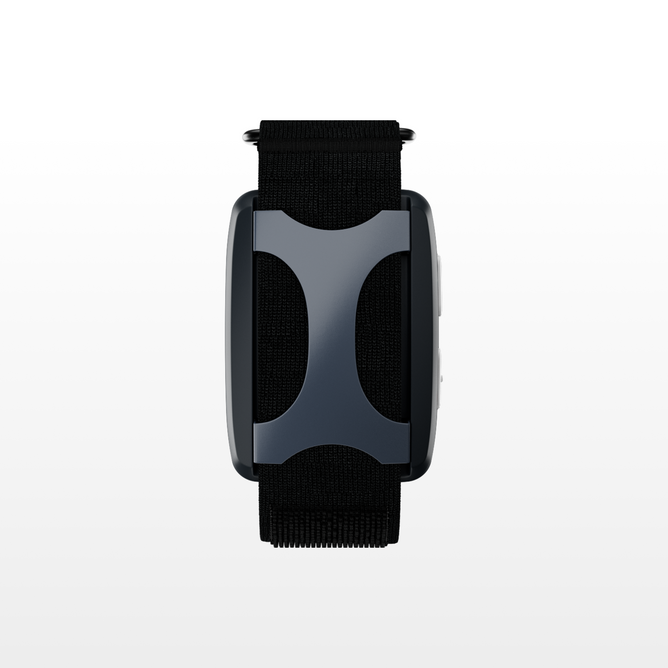
Apollo Neuro makes a wearable that takes a different approach to stress and sleep from almost everything else in the wellness aisle: instead of tracking your body and showing you a chart, it tries to change how you feel in the moment. The Apollo wearable is a small device worn on the wrist or ankle that delivers gentle, silent vibrations — Apollo calls them Vibes — designed to signal safety to the brain and help the nervous system shift toward calm, focus or sleep, depending on the mode you choose.
The company was co-founded by Dr. David Rabin, a board-certified psychiatrist and neuroscientist, and the device grew out of his research into touch, vibration and the nervous system. Apollo says more than 150,000 customers now use the wearable, and it cites 17 or more studies with over 1,700 participants behind its claims. That research base is better than most wellness wearables can show — but, as this review explains below, the strongest-sounding sleep numbers come with a caveat that matters before you spend $448.
One thing to clear up first, because it shapes the whole review: Apollo Neuro is not a vagus nerve stimulator. It is often grouped with vagus nerve devices, but it does not send electrical stimulation to the vagus nerve. It delivers low-frequency vibration to the skin — haptic stimulation — and the calming effect, where it happens, comes through the body's response to touch and vibration. Anyone shopping for a true vagus nerve stimulator, which is typically an ear-based electrical device, is looking at the wrong product here.
Highlights
- Active, not just tracking: gentle vibrations aim to improve calm, sleep, focus and recovery, rather than only measuring them.
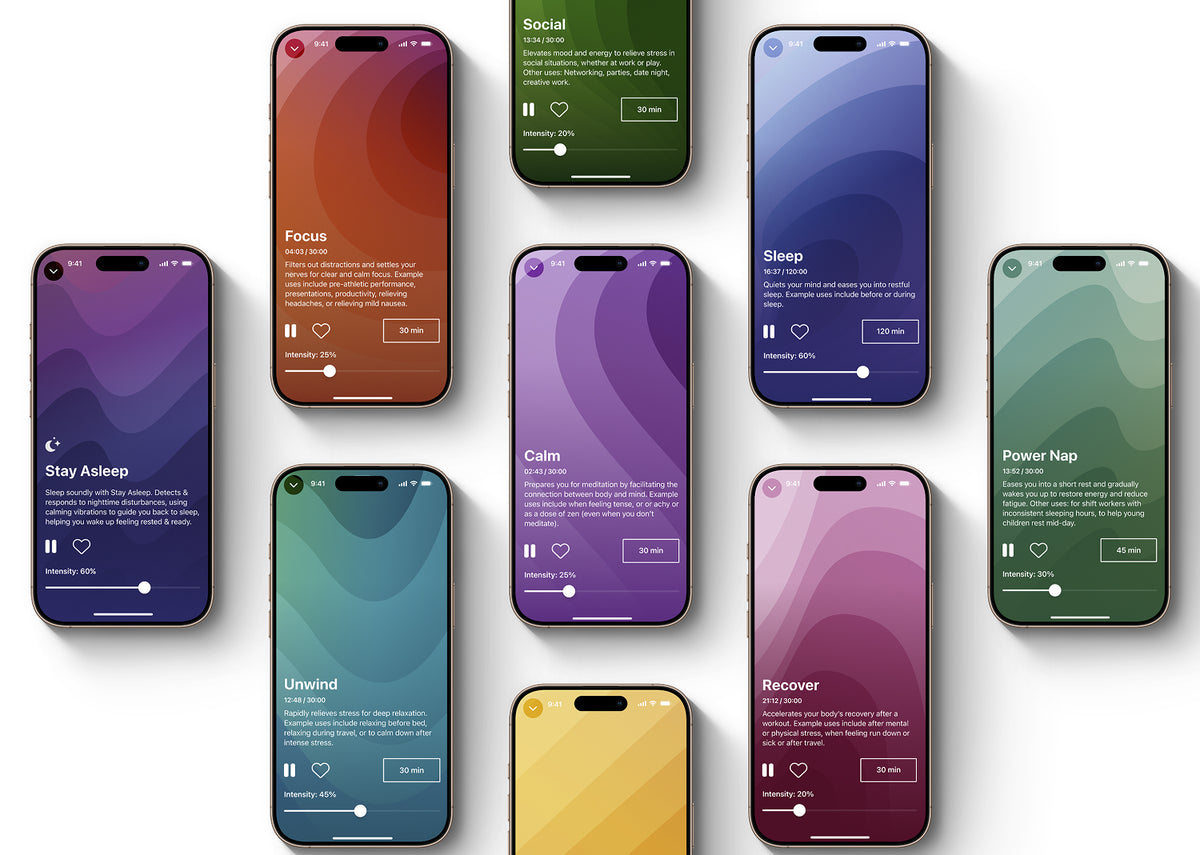
- Six Vibes: Calm, Focus, Energy, Recovery, Social and Sleep modes, controlled from the free Apollo Neuro app.
- Sleep study at scale: Apollo's largest sleep dataset covers 474,852 nights from 935 people — but it is a preprint, not yet peer-reviewed (see the accuracy section).
- HSA/FSA eligible: buyable with a Health Savings or Flexible Spending Account through TrueMed.
- Wear it on wrist or ankle: Apollo recommends the ankle while sleeping, and the band comes in Small, Medium and Large.
- Read the evidence carefully: the effects are subtle and build over weeks, and the brand's own site labels a preprint study as peer-reviewed — this review does not repeat that label.
Apollo Neuro Review
The Apollo wearable is a small rounded module that clips into a soft band and sits against the wrist or ankle. You pick a Vibe in the app — higher-frequency vibrations for energy and focus, lower ones for calm and sleep — and the device hums almost silently against your skin. Apollo describes the feeling as like music your body can feel: a deep bass without the sound, a purring cat, or a soothing hug. The vibration is deliberately subtle, and some owners say they barely notice it after the first few minutes, which is part of the point — it is meant to run in the background while you work, wind down or sleep.
The part buyers most often underestimate is the time commitment. Apollo's own guidance is to wear the device for at least 3 hours a day, 5 days a week, and it says it can take up to 30 days of regular use before changes in how you feel become consistent. Many owners notice something on the first night; the research suggests the reliable effects are cumulative. If you want a gadget you can try once and judge, this is not that gadget — it is closer to a habit you have to keep for a month before you know whether it works for you.
The app is required: the wearable is controlled entirely through the free Apollo Neuro app on iOS or Android, where you choose Vibes, set schedules and follow guided routines. There is no Wi-Fi syncing to worry about, but there is also no way to use the device without the app nearby. Battery life is rated at up to four days on the current model, and the device charges over USB — though note there is no power-off switch, so a device left sitting will run its battery down on its own.
What the Apollo does well, on the evidence available, is modest and specific. In small randomised trials Apollo cites, heart rate variability — a standard marker of nervous-system balance — rose by about 11% after three months of regular use. In Apollo's large real-world sleep dataset, people who slept under six hours gained about 46 minutes a night on average, and were 77% less likely to have another sub-six-hour night. Those are real numbers from a large sample, and they are the reason the device has a following among poor sleepers. The honest framing is that Apollo's effects are subtle, slow to arrive and easier to feel than to measure on any single night — closer to a sleep hygiene habit than to a sleeping pill.
The main weakness is the one shared by every wellness wearable that promises a feeling rather than a number: results vary a lot from person to person, and a meaningful share of owners report feeling little or nothing. Some call it a placebo after months of use. Others — including an 85-year-old veteran with PTSD who left a detailed Trustpilot review — describe it as the first thing that helped them sleep through the night in decades. Both experiences appear genuine, which is exactly why the 30-day trial matters more here than with most products on this site.
Unique Features
- Six Vibes for different moments: Calm, Focus, Energy, Recovery, Social and Sleep — each a different vibration pattern aimed at a different state, rather than a single on/off buzz.
- SmartVibes AI: the membership adds AI-generated routines that adapt to your schedule and goals, plus sleep and stress insights in the app.
- Ankle wear for sleep: Apollo specifically recommends wearing the device on the ankle overnight, where it is less likely to disturb you than on the wrist.
- Works with Oura and Apple Health: sleep and activity data can sit alongside Apollo's own tracking if you already use an Oura Ring or Apple Health.
- HSA/FSA eligible: a Letter of Medical Necessity through TrueMed, usually issued within 48 hours, lets you pay with pre-tax health account funds.
- Not waterproof: the wearable is not rated for swimming or showering — a real limitation for a device meant to be worn for hours every day.
How Much Does Apollo Neuro Cost?
As checked on the Apollo Neuro website on November 17, 2026, the Apollo Wearable + 1 Year SmartVibes AI Membership bundle is listed at $448, with no discount applied — the crossed-out price on the product page is also $448. The bundle includes the wearable, a band, and one year of SmartVibes AI Membership, which Apollo values at $99. Shipping in the US is free, and the bundle comes with a 30-day trial and a 1-year warranty.
The ongoing cost is the part to price in before you buy. After the first year, SmartVibes AI Membership costs $99 a year, and Apollo's FAQ confirms the wearable needs a SmartVibes membership to be used — so the $448 is not a one-time cost if you want the full experience beyond year one. Apollo runs frequent promotions, so the $448 figure is a list price, not a guaranteed price: independent reviews recorded a $298 sale price in October 2026 and a $349 price with a $99-off code in November 2026. Check the live price at checkout before ordering.
One timing note for buyers in late 2026: Apollo has opened pre-orders for the next-generation Apollo 2.0 at $449 (against a $599 list price), with a smaller design, stronger haptics, up to four days of battery and USB-C fast charging. If you are not in a hurry, it is worth comparing the 2.0 pre-order against the current model before you buy — the prices are nearly identical, and the 2.0 is the device Apollo will be selling next.
At $448, Apollo sits between a basic sleep tracker and a medical device: more expensive than a smartwatch band, cheaper than a clinical sleep programme, and in the same bracket as the Oura Ring 4 ($349–$499 plus $5.99 a month). The difference is that Oura measures sleep precisely without trying to change it, while Apollo tries to change it without measuring it precisely. You are paying for the intervention, not the data.

Apollo Neuro Review: What Do Customers Think?
Customer opinion on Apollo Neuro is split, and the split runs along the same line as the evidence: people who sleep better love it, and people who hit a technical or support problem hate it. On Apollo's own product page, the wearable shows 4.6 out of 5 from 1,712 reviews. That is the figure Apollo chooses to display, collected on its own store. On Trustpilot, where reviewers are not filtered through the brand's own site, Apollo holds around 3.6 out of 5 from 150+ reviews, according to an independent analysis of verified Trustpilot feedback in 2025. The gap between an on-site rating and an independent review platform is normal for direct-to-consumer brands, but it is a reason to read the written reviews rather than the stars alone.
The positive reviews, on both platforms, praise the same things: falling asleep faster, staying asleep, waking up less during the night, and feeling calmer during the day. Several long-term owners say the effect built up over weeks rather than arriving on night one — which matches Apollo's own 30-day guidance. Customer service also gets genuine praise in some reviews, with owners describing helpful, fast responses.
The complaints cluster around three themes. First, connectivity and the app: reviewers repeatedly describe Bluetooth dropouts, the app crashing or losing sync, settings resetting themselves, and a much worse experience on Android than on iPhone (the Android app scores 2.9 on Google Play, against 4.4 for the iOS app). Second, customer service: other reviewers describe slow or missing replies, unresolved refund requests and poor follow-up — and Apollo holds an F rating from the Better Business Bureau, with several complaints reported in the past three years. Third, hardware longevity: owners report batteries failing after about two years, and devices that stop holding a charge or stop syncing.
A note on the evidence: the sleep numbers in this review come from Apollo's own study of 474,852 nights from 935 customers, published as a manuscript on the JMIR preprint server in July 2026. Apollo's homepage labels this research "peer reviewed, proven results" — but according to an independent analysis in November 2026, the manuscript is a preprint that has not yet been peer-reviewed, and the data are real-world records from Apollo's own customers, analysed by Apollo. That does not make the numbers false, but it does mean they are not independent proof. The smaller randomised trials behind the HRV claim are a stronger form of evidence than a large dataset the company collected and analysed itself, and this review treats them that way.
Is Apollo Neuro Legit?
Yes — Apollo Neuro is a real, operating company with a real product, a named scientific founder, products sold through its own site, and published research behind its claims. That is a stronger foundation than many of the supplement and gadget brands reviewed on this site, and the device has been covered by independent reviewers who tested it for weeks rather than unboxing it once.
The caveats are about the buying experience and the strength of the claims, not the company's existence. The Trustpilot record and the BBB F rating show a real pattern of support and connectivity complaints, and the brand's own accuracy language overstates the status of its sleep study by calling a preprint peer-reviewed. Neither point makes Apollo a scam — but both mean you should buy it for what it verifiably does (a gentle, cumulative nudge toward calmer sleep for many users) rather than for the headline claims, and you should keep your order confirmation and test the device properly inside the 30-day window.
One more practical check: the Apollo wearable is a consumer wellness device, not a medical device, and no FDA clearance or approval was confirmed for it in the sources reviewed. It is not a treatment for insomnia, anxiety or any medical condition, and its vibration patterns should not be used to make medical decisions.

Is Apollo Neuro Worth It?
It is worth it if you are the right buyer: someone who struggles to fall asleep or stay asleep, is willing to wear a device for 3+ hours a day for a full month before judging it, and would rather try a gentle, non-drug approach than a supplement or a prescription. For that buyer, the $448 price plus the 30-day trial is a fair test — and the trial is the safety net that makes the gamble reasonable.
It is not worth it if you want a guaranteed result on night one, if you will not wear it consistently, if you mainly use Android (where the app experience is notably worse), or if you want precise sleep tracking — an Oura Ring measures sleep far better, and a $30 white-noise machine costs far less. It is also a harder buy if you are sensitive to support risk: the 30-day trial is real, but the return process depends on reaching support first, and the Trustpilot record shows that is where some buyers had trouble.
Apollo Neuro Discounts and Promotions
The main discount is the bundle itself: the $448 price includes one year of SmartVibes AI Membership, which Apollo values at $99, plus a free sleep band in the current listing. Apollo does not run a coupon programme — a November 2026 check found no promotions page, no banner code, and no sitewide sale, and a test purchase went through at the full $448. Discounts that do appear are usually bundle deals: $150 off when you buy two or more devices, and occasional sale prices such as $298 in October 2026 or $349 with a $99-off code in November 2026.
The deal worth watching right now is the Apollo 2.0 pre-order at $449 against a $599 list price, open to everyone with no code needed. If you are buying in late 2026, compare that pre-order with the current model before you pay $448 for the older device. As with every price in this review, check the live price at checkout — Apollo's promotions change often, and the price on the product page is the one that counts.
Where Can I Buy Apollo Neuro?
The safest place to buy is Apollo's own website, apolloneuro.com — that is where the 30-day trial, the 1-year warranty and the HSA/FSA checkout apply in full, and where you get the current bundle with the free sleep band. The Shop Now buttons in this review go to the brand's site. Apollo also sells through Amazon and selected retailers, but buying direct is the only route that guarantees the trial terms and the membership bundle described here.
Before you order, check three things: your band size (Medium fits most adult wrists and ankles; order a size that fits your ankle as well as your wrist if you plan to sleep in it), whether you want to pay with HSA/FSA funds through TrueMed, and whether the Apollo 2.0 pre-order changes your timing. The wearable comes in four colours — Stealth, Rose, Glacier and Twilight — and all four were in stock at the time of checking on November 17, 2026.
FAQs
Is Apollo Neuro a vagus nerve stimulator?
No. Apollo delivers gentle vibration to the skin (haptic stimulation), not electrical stimulation of the vagus nerve. It is often grouped with vagus nerve devices, but the mechanism is different, and it should not be bought as a vagus nerve stimulator.
How long does it take to feel a difference?
Some people notice calmer sleep within the first few nights, but Apollo says it can take up to 30 days of regular use — at least 3 hours a day, 5 days a week — for consistent changes. Judge it after a month of steady use, not after one night.
Is Apollo Neuro waterproof?
No. The wearable is not rated for swimming or showering, so take it off before you get in water.
Is Apollo Neuro FDA approved?
No FDA clearance or approval was confirmed for the Apollo wearable in the sources reviewed for this article. It is sold as a consumer wellness device, not a medical device.
Do I need the SmartVibes membership?
Yes, in practice. The first year is included in the $448 bundle; after that, SmartVibes costs $99 a year, and Apollo's FAQ says the wearable needs a membership to be used.
What is the return policy?
Apollo offers a 30-day trial from the date of delivery: if you are unsatisfied for any reason, you can request a full refund within 30 days, excluding shipping costs. Import and duty fees for non-US orders are not refundable. The device also carries a 1-year warranty.
Can I buy Apollo Neuro with HSA/FSA funds?
Yes, through TrueMed at checkout, which can issue a Letter of Medical Necessity within 48 hours. Check your own plan's rules first.
Should I buy the current Apollo or wait for Apollo 2.0?
The Apollo 2.0 is on pre-order at $449 (list $599) with a smaller design, stronger haptics and USB-C charging. If you are not in a hurry, compare the two before buying the current model at $448 — the prices are nearly the same.